
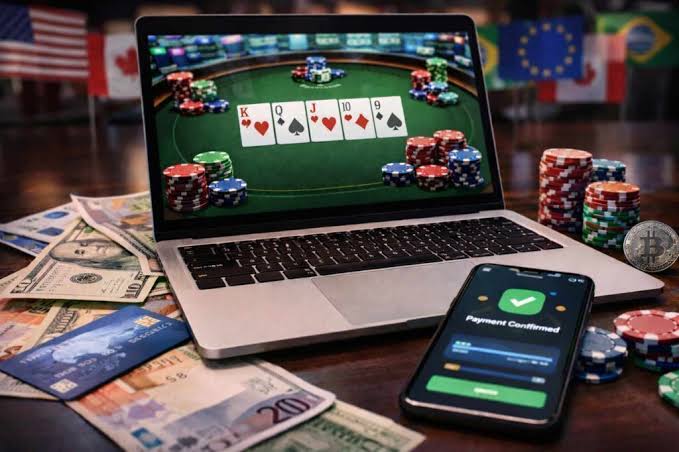
Digital wallets make it easy to pay for online services, move money between accounts, and review recent transactions. Some also provide spending controls or notifications that can help users monitor their finances.
For people who choose to gamble where it is legal, these tools can provide an additional layer of budgeting discipline. The important point is to configure them before spending begins. A limit chosen during a stressful session may be less effective than a clear rule established in advance.
What Are Digital Wallet Limits?
Digital wallet limits are controls that restrict or monitor certain account activities. Depending on the provider, they may apply to individual transactions, daily spending, transfers, withdrawals, or the total balance held in the wallet.
Not every wallet provides all these features. Some limits may be imposed by the provider for security or regulatory reasons, while others may be adjustable by the account holder.
It is also important to distinguish a wallet limit from a gambling-platform limit. A wallet may restrict transfers without tracking gambling losses, time spent playing, or funds held in another payment service.
Step 1: Calculate an Affordable Entertainment Budget
Start by reviewing your essential expenses and financial commitments. Include housing, utilities, groceries, transportation, debt payments, insurance, savings goals, and emergency needs.
Only after accounting for these obligations should you decide whether any money is available for optional entertainment. If your finances are uncertain or you are struggling to meet essential expenses, the appropriate gambling budget may be zero.
Choose a limit that does not depend on future winnings, credit, or borrowing.
Step 2: Check Your Wallet’s Available Controls
Open the wallet’s official settings or help documentation and identify the controls it actually supports. Possible features include:
- Per-transaction spending limits.
- Daily or monthly transfer limits.
- Payment notifications.
- Balance alerts.
- Merchant or transaction restrictions.
- Card-freezing or account-locking options.
A transfer limit is not necessarily a spending limit. For example, a wallet may permit several separate transactions, each below the maximum, even if their combined value exceeds your intended budget.
Understand what the control measures before relying on it.
Step 3: Configure Limits Before Depositing
Set the available restrictions before transferring money to a gambling platform. Where supported, use the strictest practical limits consistent with your broader financial plan.
If a wallet does not support gambling-specific restrictions, consider whether your bank, card issuer, device, or gambling operator offers relevant controls. Availability varies by provider and location.
Avoid relying on memory alone. Written rules and automated alerts can make it easier to notice when you approach a boundary.
Step 4: Combine Wallet Controls With Platform Controls
Wallet controls and operator controls serve different purposes. A wallet may restrict outgoing payments, while a gambling platform may offer deposit limits, time reminders, cooling-off periods, or self-exclusion.
Using both types of controls can provide additional oversight, but neither should be treated as foolproof. Limits may not cover every payment method or account, and some restrictions may take time to become effective.
Review the exact terms, including how changes work and whether a limit can be increased immediately.
Step 5: Review Transactions Regularly
Check your wallet history at a consistent time, such as once a week. Look for the total amount transferred, any unexpected charges, repeated small payments, and fees.
Compare the figures with your budget rather than relying on the balance remaining in the wallet. A low balance might mean that money was spent, transferred elsewhere, or used for another purpose.
If the numbers do not match your records, investigate the difference before making another payment.
Step 6: Create a Rule for Reaching the Limit
A limit only helps if you follow it. Decide in advance what happens when you reach it.
For example, once your entertainment budget is exhausted, stop making gambling-related payments until the next budget period. Do not switch wallets, use another card, borrow money, or increase the limit to continue playing.
If you repeatedly bypass your own restrictions, consider stronger measures such as payment blocks, account pauses, or self-exclusion where available.
What Wallet Limits Cannot Do
Wallet limits cannot guarantee that gambling remains harmless. They may not cover cash transactions, other payment accounts, or transfers made through a different provider. Nor can they prevent every impulsive decision or account-security problem.
For this reason, combine technical controls with a realistic budget, transaction records, and a willingness to stop. If gambling has begun to affect essential expenses or relationships, seek support rather than relying solely on payment settings.
Conclusion
Digital wallet limits can help make gambling-related spending more deliberate by restricting certain transactions and making payment activity easier to monitor. Their effectiveness depends on the features available, how the limits are configured, and whether the user follows them.
Set your budget before spending, combine wallet and platform controls where appropriate, and review transactions regularly. If you cannot stay within your limit, stop and consider stronger financial safeguards or professional support.
FAQs
Can a digital wallet stop all gambling payments?
Not necessarily. Some wallets offer transaction controls, but restrictions may not cover every merchant, payment route, or account. Check the provider’s exact terms.
Is a wallet transfer limit the same as a gambling budget?
No. A transfer limit restricts certain payment activity. A gambling budget defines the total amount you can afford to spend on gambling over a period.
Should I raise my wallet limit after reaching it?
Avoid raising a limit to continue gambling. Treat the original limit as a boundary and wait until the next planned budget period.
What if I keep bypassing my own payment limits?
Consider stronger restrictions, including blocking payment routes, taking a break, or using self-exclusion tools. If gambling is affecting your finances or well-being, seek confidential support.