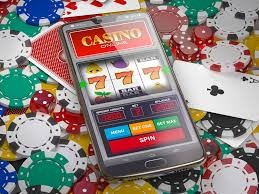
There is a quiet transformation that takes place when a player spends enough time interacting with gaming credits inside a casino system. What once felt like a clear boundary between real money and digital numbers begins to soften, slowly and almost invisibly. At the beginning, the difference is easy to understand—cash belongs to everyday life, while credits exist only inside the game. But over time, that clarity fades, and the experience becomes less defined.
This shift does not come from one moment. It forms through repetition, speed, and familiarity. The more a player interacts with credits that move instantly and exist only on a screen, the more natural it feels to treat them as a meaningful form of value. Eventually, the separation between digital and real begins to blur.
When Credits Start to Feel Like Currency
One of the first signs of this shift is when gaming credits begin to feel like everyday money. The structure of interaction plays a large role here. A player places credits, sees results, and receives returns in a repeated cycle that mirrors real financial behavior.
Even though credits are confined to the system, they are used in a way that feels familiar. This familiarity matters. According to a behavioral economics study, people tend to treat symbolic or digital representations of money as real value once they are used consistently in transactional patterns.
A player on a gaming forum explained:
“After a while, I stop thinking about credits as something different. They feel like money, just in a different format.”
This repeated use builds trust. The brain stops questioning the meaning of credits and starts accepting them as a valid form of value within that environment.
Instant Conversion Changes Perception

Another key factor is how easily value moves between real money and gaming credits. A player can convert funds into credits in seconds, and those credits begin changing immediately.
This speed creates a sense of continuity.
Research from the Bank for International Settlements highlights that when financial value can be converted instantly between formats, users are more likely to perceive those formats as interchangeable. In other words, the faster the transition, the weaker the boundary.
A user shared this perspective online:
“It doesn’t feel like I’m switching between two things. It feels like it’s all one system.”
When money flows seamlessly between forms, the mind begins to group them together. The distinction becomes less important than the movement itself.
The Power of Visual Representation
Design plays a quiet but powerful role in shaping how gaming credits are understood.
Credits are displayed as clean, stable numbers. They update smoothly, remain visible, and are presented in a consistent location. This gives them a sense of structure and reliability.
A usability study found that users are more likely to trust and assign value to numbers that are clearly presented and consistently displayed, even if those numbers represent abstract systems.
This explains why credits can feel stable despite being digital.
A UX researcher noted:
“Clarity in design creates confidence in value. If it looks structured, it feels real.”
Over time, this visual consistency reinforces the idea that credits are not temporary or artificial, but part of a meaningful system of value.
Emotional Responses Bridge the Gap
The most powerful connection between gaming credits and real-world value is not visual or structural—it is emotional.
When a player wins, the feeling of excitement is real. When they lose, the disappointment is real. These emotions do not depend on whether the value is physical or digital.
A 2022 study in digital finance psychology found that emotional responses to gains and losses remain strong even when value is represented digitally, though the intensity may vary.
A player described it simply:
“The numbers might not be real money in my hand, but the feeling when they change is completely real.”
This emotional link is what brings digital credits closer to real-world value. The brain responds to meaning, not form. If something feels important, it becomes important.
Familiarity Turns Abstraction Into Reality

At first, gaming credits may feel abstract. But repetition changes that.
The more time a player spends interacting with digital value, the more familiar it becomes. And familiarity reduces the sense of difference.
A study from MIT on digital behavior found that repeated exposure to virtual value systems leads users to treat them as real within that context, even if they remain abstract outside it.
This is why long-term players often describe credits as “just part of the system” rather than something separate.
“It’s like a second type of money you get used to,” one player wrote.
“At some point, you don’t think about the difference anymore.”
The mind adapts quickly. What once felt unusual becomes normal.
When Ownership Feels Different
As the boundary between credits and money fades, another subtle shift begins to appear—the feeling of ownership.
Physical money feels personal and separate from any system. But gaming credits exist inside a controlled environment. They are stored, displayed, and managed by the platform.
This can create a quiet psychological effect where credits feel less like something owned and more like something used within a system.
Research in financial behavior shows that people are more likely to spend funds stored within a platform compared to funds held externally, because they feel assigned to that environment.
A player shared this thought:
“It feels like money that belongs in the game, not something I need to hold onto.”
This shift changes behavior in subtle ways, influencing how value is treated over time.
The Blending of Digital and Real Worlds
As all these elements come together—familiarity, speed, design, and emotion—the line between gaming credits and real-world value becomes less clear.
The two forms begin to feel connected, even if they are technically different.
A Deloitte digital economy report noted that over 60% of users in digital financial systems begin to perceive platform-based value as comparable to traditional money after repeated use.
This does not mean that credits replace money. It means they begin to share the same mental space.
A Quiet but Meaningful Shift
There is a simple truth behind all of this: value is not only defined by what it is, but by how it is experienced.
Gaming credits gain meaning because they are used, seen, and felt in ways that mirror real financial behavior. Over time, this experience reshapes perception.
The boundary does not disappear—it softens.
Final Reflection
The blurred line between gaming credits and real-world value reveals how flexible human perception can be. What begins as a clear distinction slowly becomes a shared experience, shaped by interaction and familiarity.
For those who notice this shift, it offers an important insight.
Because once you understand how easily the mind adapts to new forms of value, you begin to see that money is not just something you hold—it is something you learn to experience.
And in digital environments, that experience can quietly redefine what value feels like.